Wheel Alignment vs. Tire Balancing: 7 Essential Differences Every Driver Should Know
ou notice your steering wheel vibrating on the highway, or perhaps your vehicle has started pulling slightly to one side. When you bring your car in for service, you might hear two recommendations: wheel alignment and tire balancing. Although these services sound similar, they address very different problems.
Understanding wheel alignment vs tire balancing can help you recognize what your vehicle may need, avoid unnecessary repairs, and protect your tires from premature wear.
Both services contribute to how your vehicle handles, but they accomplish different things. Wheel alignment focuses on the angles of your wheels, while tire balancing addresses how weight is distributed around each tire and wheel assembly.
Knowing the difference is especially valuable for Minneapolis drivers dealing with potholes, rough pavement, and changing road conditions throughout the year.
Let’s explore seven essential differences between wheel alignment and tire balancing, including how each service works, the warning signs, and when your vehicle might need both.
1. Wheel Alignment Adjusts Angles, While Tire Balancing Corrects Weight Distribution
The biggest difference between wheel alignment vs tire balancing is what technicians are correcting.

Wheel alignment involves adjusting the angles of your wheels according to the vehicle manufacturer’s specifications. These angles determine how your tires contact the road and how your vehicle responds to steering.
When your alignment is correct, your wheels point in the intended directions, helping your vehicle travel predictably and allowing your tires to wear more evenly.
Tire balancing, on the other hand, addresses uneven weight distribution within the tire and wheel assembly.
Even brand-new tires and wheels are not perfectly uniform. Small differences in weight can cause vibrations as the assembly rotates.
Technicians correct these imbalances by attaching small weights to specific locations on the wheel.
Simply put, alignment determines how your wheels are positioned, while balancing helps them rotate smoothly.
2. Wheel Alignment and Tire Balancing Have Different Warning Signs
One of the easiest ways to understand wheel alignment vs tire balancing is to look at the symptoms associated with each problem.
Signs Your Vehicle May Need a Wheel Alignment
Common symptoms include:
- Vehicle pulling to the left or right
- Steering wheel sitting crooked while driving straight
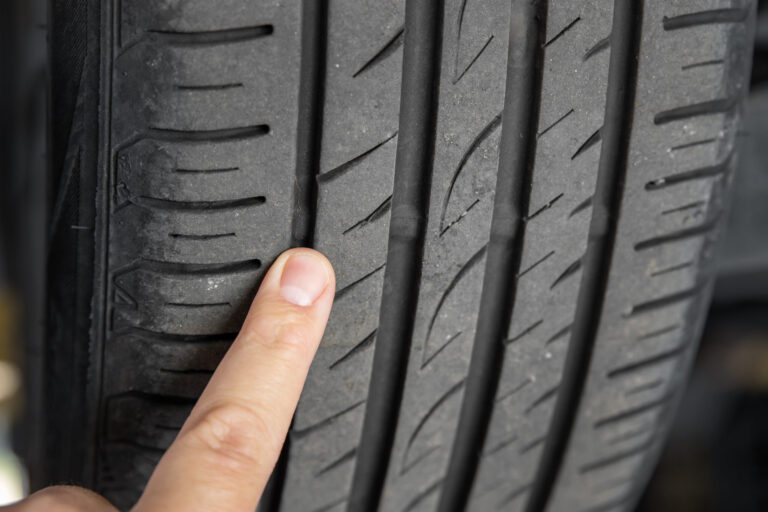
- Uneven tire wear
- Vehicle wandering on the road
- Changes in steering response
For example, if you must constantly make small steering corrections to keep your vehicle traveling straight, incorrect alignment could be contributing to the problem.
However, pulling can also result from tire pressure differences, tire defects, or brake problems, so an inspection is important.
Signs Your Tires May Need Balancing
Common symptoms include:
- Steering wheel vibration at certain speeds
- Shaking through the seat or floor
- Vibrations that become more noticeable on the highway
- Irregular tire wear
- A rougher ride at particular speeds
An out-of-balance tire often produces vibrations within a specific speed range.
If your steering wheel feels smooth around town but begins shaking on the interstate, tire balancing may be worth checking.
Neither symptom list guarantees a particular diagnosis. Damaged tires, bent wheels, and worn suspension components can create similar problems.
3. Wheel Alignment and Tire Balancing Use Different Equipment
Although both services involve your wheels, technicians use different equipment to perform them.
How Wheel Alignment Works
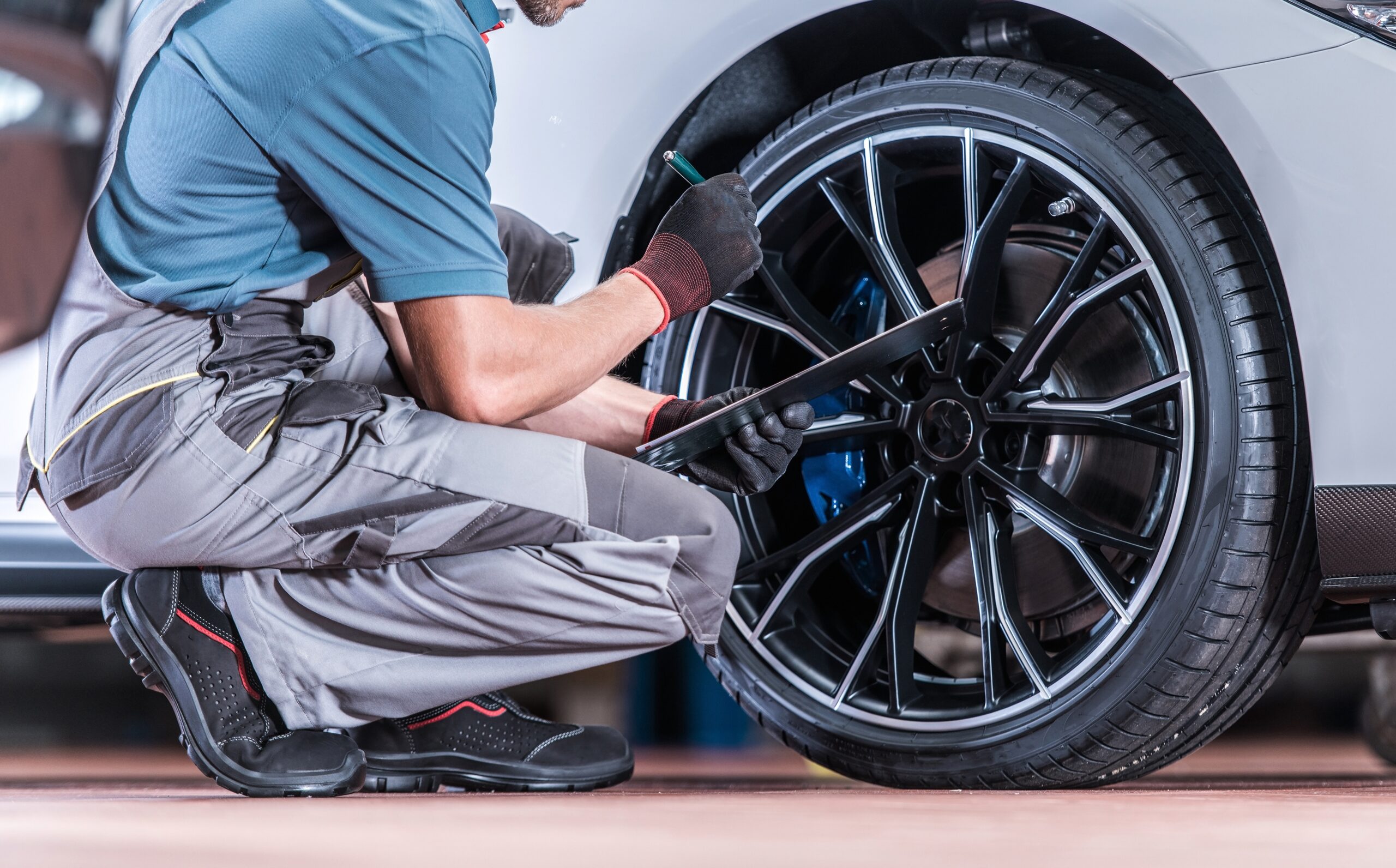
During an alignment, the vehicle is positioned on specialized equipment that measures wheel angles.
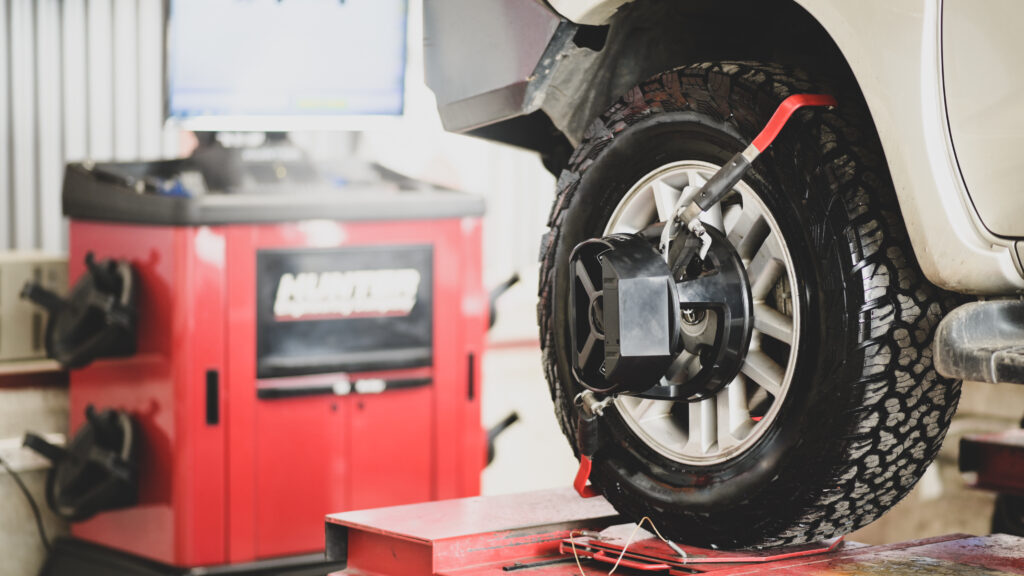
Three important measurements are:
Camber: The inward or outward tilt of a wheel when viewed from the front of the vehicle.
Caster: The angle of the steering axis when viewed from the side. It influences steering stability and how the steering returns toward center.
Toe: Whether the wheels point slightly inward or outward relative to the vehicle’s centerline.
Technicians compare these measurements with manufacturer specifications and make adjustments where the vehicle’s design allows.
Not every alignment angle is adjustable on every vehicle. Damaged or worn suspension components may also need repair before an accurate alignment can be completed.
How Tire Balancing Works
Tire balancing requires a different process.
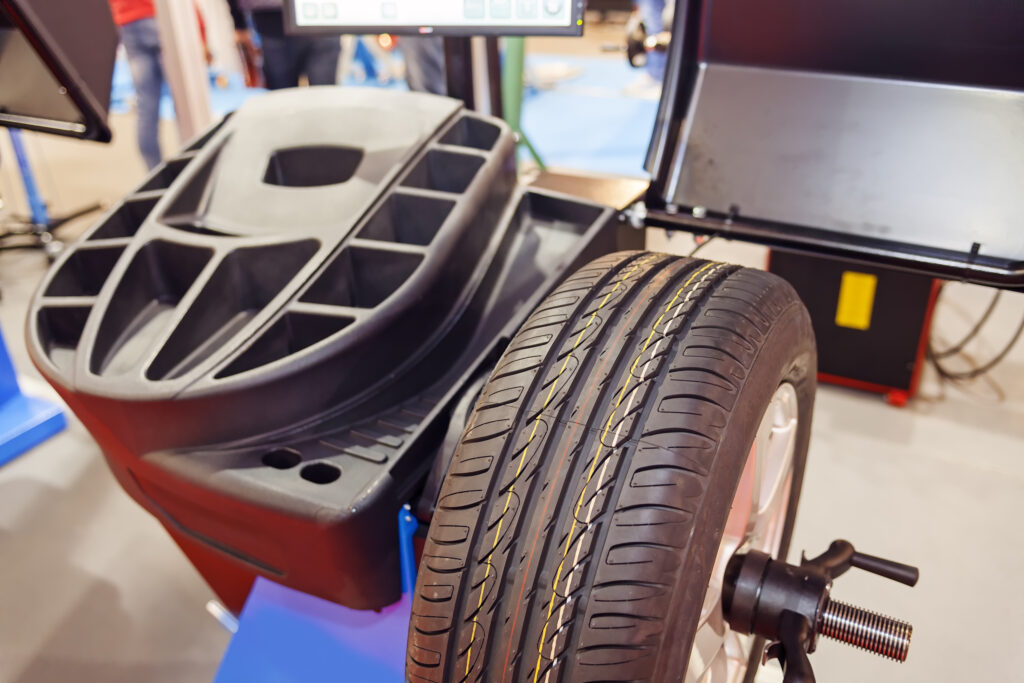
The technician removes the tire and wheel assembly from the vehicle and places it on a balancing machine.
The machine spins the assembly and identifies uneven weight distribution.
Small wheel weights are then installed in specific locations to counteract the imbalance.
The assembly may be spun again to confirm that the correction is accurate.
Unlike an alignment, balancing does not involve adjusting steering or suspension angles.
4. Wheel Alignment and Tire Balancing Affect Tire Wear Differently
Your tires represent a significant investment, and both services can help protect them.
However, the type of wear caused by each problem is different.
Tire Wear Caused by Poor Alignment
When your wheels are misaligned, the tires may not roll in the intended direction.
Instead, they can scrub against the road surface, increasing friction and wearing certain portions of the tread faster.
Common alignment-related wear patterns include:
- Excessive wear along the inner edge
- Excessive wear along the outer edge
- Feathered tread edges
- Rapid or uneven tread wear
If ignored, poor alignment can shorten tire life considerably.
Tire Wear Caused by Poor Balancing
An unbalanced tire creates repetitive forces as it rotates.
Over time, these forces can contribute to irregular tread wear, including cupping or scalloping.
Cupping creates uneven patches around the tire’s circumference and may produce additional road noise.
However, worn shocks, struts, and other suspension problems can also cause cupping.
This is why identifying the actual cause matters before replacing tires or performing unnecessary services.
5. Potholes Can Affect Alignment and Tire Balance in Different Ways
Minneapolis drivers are familiar with the impact potholes can have on their vehicles.
A hard impact can place considerable stress on tires, wheels, and suspension components.
One particularly important difference between wheel alignment vs tire balancing is how road damage can affect each system.
A severe pothole impact may change alignment angles by bending or shifting suspension or steering components.
The same impact might also bend a wheel or damage a tire, creating vibrations that resemble a balancing problem.
In some cases, wheel weights can become dislodged, resulting in an imbalance.
After hitting a pothole, watch for:
- New steering wheel vibrations
- Vehicle pulling to one side
- Changes in handling
- Unusual tire wear
- Visible wheel damage
- New suspension noises
A wheel that has been physically bent may not be corrected by balancing alone.
Likewise, adjusting alignment will not repair a damaged tire.
A thorough inspection helps determine which components were affected.
6. Wheel Alignment and Tire Balancing Are Needed at Different Times
Another important distinction involves when each service should be performed.
When Should You Get a Wheel Alignment?
Consider having your alignment checked when:
- Your vehicle consistently pulls to one side
- Your steering wheel is no longer centered
- Your tires show unusual wear patterns
- You hit a significant pothole or curb
- Certain steering or suspension components have been replaced
- Your vehicle develops unexplained handling problems
An alignment check is also worth considering when purchasing new tires, particularly if your old tires wore unevenly.
Some manufacturers and tire professionals recommend periodic alignment inspections, but the appropriate schedule depends on your vehicle, driving conditions, and maintenance recommendations.
When Should You Get Your Tires Balanced?
Tire balancing is generally performed when new tires are mounted on wheels.
It may also be necessary when:
- A tire is removed and remounted
- Wheel weights become damaged or detached
- You notice speed-related vibrations
- A tire or wheel assembly is replaced
- An inspection identifies an imbalance
Balancing is not automatically required every time you rotate your tires, although vibration symptoms may justify checking it.
The best approach is to follow your vehicle’s maintenance recommendations and address unusual symptoms promptly.
7. You May Need Both Services, but One Does Not Replace the Other
A common misconception is that getting an alignment automatically balances your tires.
It doesn’t.
Likewise, balancing your tires will not correct incorrect wheel angles.
Your vehicle can have perfectly balanced tires and still pull to one side because of poor alignment.
It can also have correct alignment while experiencing highway vibrations caused by an unbalanced wheel.
Sometimes both problems exist simultaneously.
For example, a vehicle that has traveled extensively on rough pavement may develop uneven tire wear from alignment problems while also experiencing vibration from a damaged or unbalanced wheel.
Correcting only one issue may improve some symptoms without eliminating the others.
This is why technicians consider the complete condition of the tires, wheels, steering, and suspension before recommending repairs.
Wheel Alignment vs Tire Balancing: Which Service Fixes a Shaking Steering Wheel?
If your steering wheel shakes while driving, tire balancing is often one of the first possibilities to investigate.
However, the speed and circumstances of the vibration matter.
A vibration that becomes noticeable at highway speeds may point toward tire imbalance, wheel damage, or a tire problem.
A steering wheel that shakes primarily while braking may indicate a braking system issue instead.
If the vibration occurs while accelerating, drivetrain or engine-related problems may be involved.
Worn steering and suspension components can also produce vibrations that resemble tire imbalance.
Although wheel alignment can affect steering behavior, incorrect alignment alone is not usually the primary cause of a speed-specific steering wheel vibration.
A proper diagnosis helps prevent replacing or adjusting components that aren’t responsible for the problem.
Does Wheel Alignment or Tire Balancing Improve Gas Mileage?
Both services support proper tire performance, but their effects on fuel economy are different.
Incorrect alignment can increase rolling resistance when tires scrub against the pavement instead of rolling as intended.
This creates additional work for the engine and may contribute to reduced fuel efficiency.
Tire balancing primarily improves ride smoothness and reduces vibration. While properly maintained tires support efficient vehicle operation, balancing alone generally does not produce a significant improvement in gas mileage.
If you’ve noticed a substantial drop in fuel economy, other factors such as tire pressure, driving habits, engine performance, and brake problems may be more important to investigate.
Maintaining proper tire pressure and alignment remains an important part of overall vehicle efficiency.
Do You Need an Alignment Every Time You Buy New Tires?
Not necessarily.
New tires should be balanced when mounted, but an alignment is a separate service.
If your vehicle tracks straight, your steering wheel is centered, and your previous tires wore evenly, an alignment adjustment may not be necessary.
However, new tires are a good opportunity to evaluate alignment.
If your previous tires developed excessive wear along one edge, installing new tires without correcting the underlying problem could cause the same wear pattern to return.
An alignment inspection can help determine whether adjustments are needed before premature wear affects your new tires.
Is Tire Rotation the Same as Tire Balancing?
Tire rotation is another service frequently confused with balancing and alignment.
During tire rotation, the tires are moved to different positions on the vehicle according to an appropriate rotation pattern.
This helps distribute wear because tires in different positions experience different loads and forces.
Tire balancing corrects uneven weight distribution within each tire and wheel assembly.
Wheel alignment adjusts the angles of the wheels.
These are three separate maintenance procedures.
Depending on the vehicle and tire condition, all three may contribute to longer tire life and better driving performance.
Can You Drive With Bad Alignment or Unbalanced Tires?
Minor alignment or balance problems may not immediately prevent a vehicle from being driven, but ignoring them can lead to additional concerns.
Poor alignment may accelerate tire wear and affect handling.
Unbalanced tires can create persistent vibration and place additional stress on suspension components.
More importantly, the symptoms could indicate a different problem entirely.
A damaged tire, bent wheel, loose steering component, or worn suspension joint may require more urgent attention.
If your vehicle suddenly develops severe vibration, unpredictable steering, or significant pulling, have it inspected before continuing normal driving.
Why Professional Diagnosis Matters
Understanding wheel alignment vs tire balancing can help you describe your vehicle’s symptoms, but it doesn’t always identify the exact cause.
For example, a vehicle that pulls to one side may have incorrect alignment, uneven tire pressure, a tire-related issue, or a dragging brake.
A vehicle that vibrates at highway speeds may need balancing, but it could also have a bent wheel or damaged tire.
An inspection allows technicians to evaluate the complete situation instead of assuming the most familiar explanation is correct.
That can save time, protect your tires, and help ensure the recommended service addresses the actual problem.
Conclusion
Understanding wheel alignment vs tire balancing is an important part of maintaining your vehicle’s handling, comfort, and tire life.
Wheel alignment focuses on the angles of your wheels and how they interact with the road. Tire balancing corrects uneven weight distribution so the tire and wheel assemblies rotate smoothly.
Although these services are different, both contribute to proper tire performance and can help prevent unnecessary wear.
If your vehicle pulls to one side, your steering wheel vibrates, or your tires are wearing unevenly, don’t assume you automatically need one particular service. Identifying the underlying cause is the best way to make an informed repair decision.
Minneapolis roads can be demanding on tires, wheels, and suspension components, making regular inspections particularly valuable.
If you’re unsure whether your vehicle needs an alignment, tire balancing, or another repair, contact us here to schedule an inspection with Longfellow Automotive. Our team can evaluate your vehicle’s symptoms and help determine the appropriate service to keep your car handling smoothly and your tires performing as intended.